Operations
Rack layout and thermal management built for sustained uptime
Running CPU compute at high density around the clock comes down to two things done consistently well: airflow and power. Every rack at 9Core is designed around both.
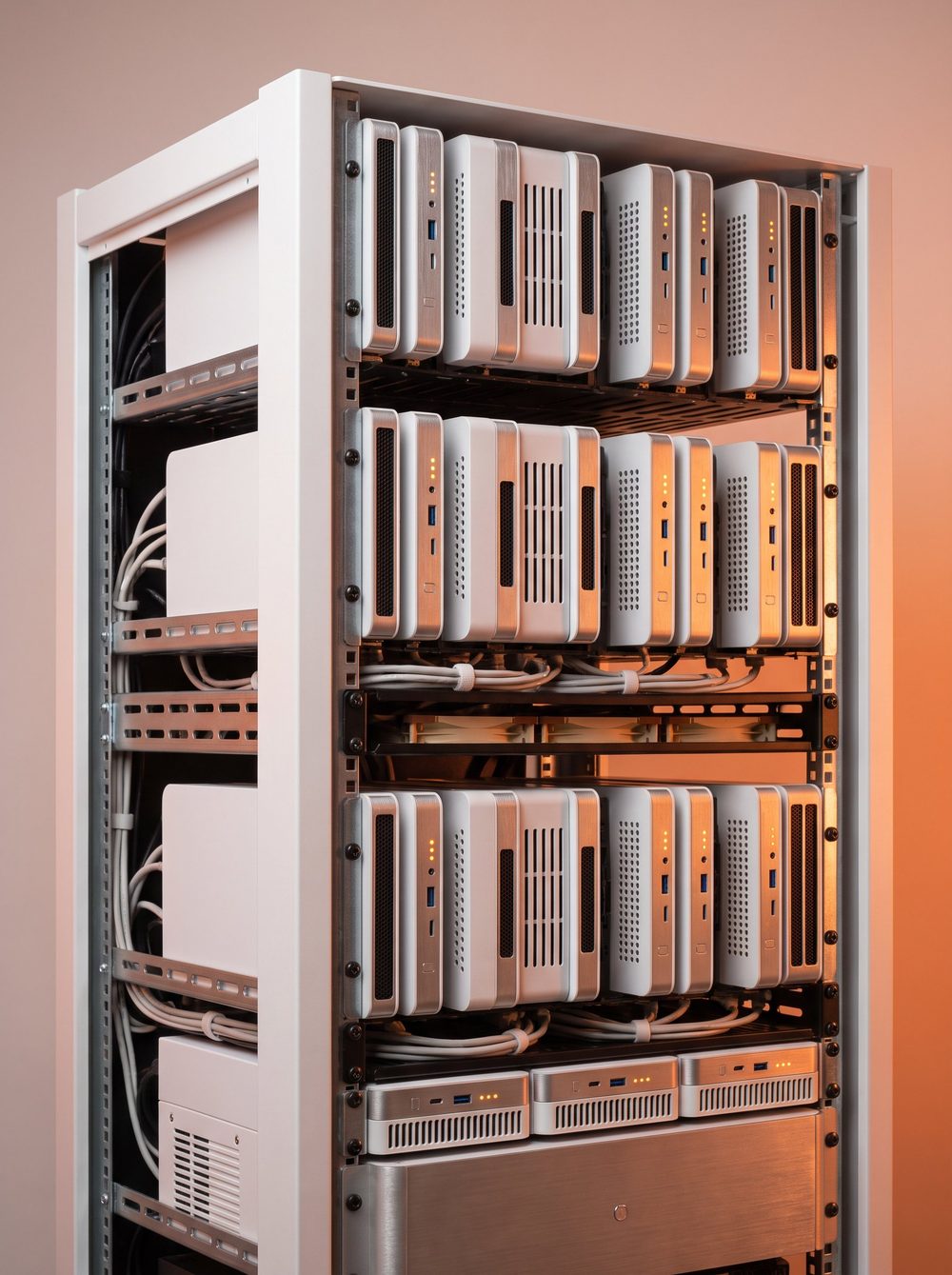
Rack layout
Industrial-grade design, built to be serviced
Front-to-back airflow
Every rack is arranged so intake and exhaust run in a consistent direction, avoiding the hot spots and recirculation that come from mixed airflow layouts.
High-density configuration
Compute units are packed tightly to maximize output per square foot of floor space, without compromising the airflow path each unit depends on.
Serviceable by design
Rack layout leaves room for rapid maintenance access, so a unit that needs attention can be reached and swapped without disrupting the rest of the row.
Balanced intake and exhaust pressure
Airflow is tuned rack by rack so intake and exhaust pressure stay balanced, which keeps cooling predictable as ambient conditions shift.
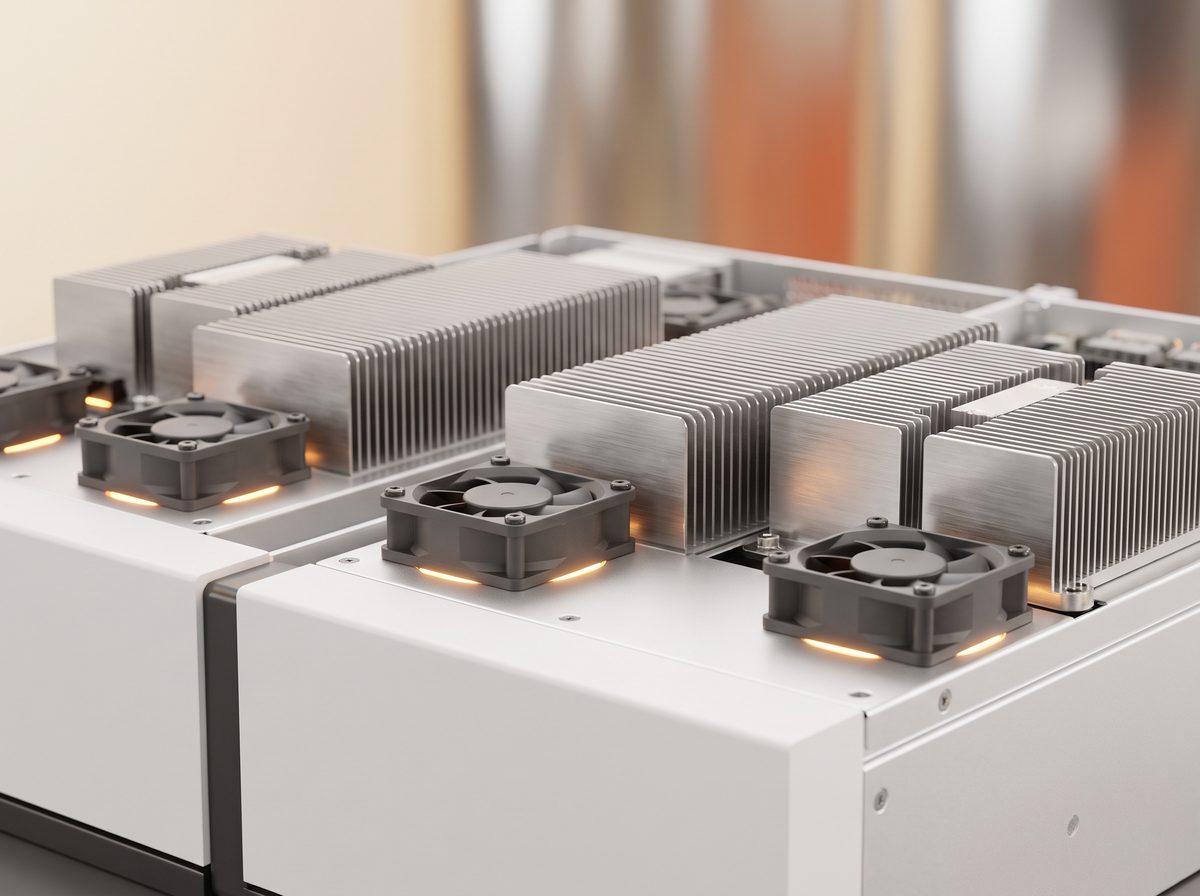
Thermal management
Cooling that holds up under continuous load
RandomX workloads run continuously, which means thermal management has to hold up for weeks and months, not just survive a benchmark run. 9Core's approach layers several techniques rather than relying on any single one:
- Front-to-back airflow alignment, matched across every rack in a row
- Thermal zoning, so heat-dense sections get proportionally more cooling capacity
- Predictive temperature monitoring, catching drift before it becomes a problem
- Automated throttling safeguards, protecting hardware if conditions spike
- Optimized fan curves, tuned per unit rather than applied uniformly
Monitoring and power
Watched continuously, powered redundantly
Uptime depends on catching problems before they cause downtime and on power infrastructure that does not have a single point of failure. Both are treated as operational basics, not extras.
These practices, predictive maintenance schedules, continuous monitoring, and hot-swappable components, are covered in more technical depth on the Hardware & Racks page, alongside the power distribution design that keeps racks running through routine maintenance.
Go to Hardware & Racks →